Smarty Plants - Plants for Kids
  • Facebook
  • Google+
  • RSS
  • Home
  • About
    • Hey Kids!
    • Hey Mums and Dads!
    • Hey Teachers!
    • The Legal Stuff
    • For the Media
  • Smarty Facts
  • The Garden
    • Garden Tools
    • Looking after the Garden
      • Waterwise Gardens
      • Fertilisers and Compost
      • Weed Control in the Garden
      • Looking after Potted Plants
    • Planting and Potting
    • Handy Garden Structures
    • Good Bugs
    • Bad Bugs
    • Plant Diseases
    • What is…?
  • The Kitchen
    • Breakfast
    • Lunch
    • Soups
    • Mains
    • Salads and Vegetables
    • Desserts
    • Cakes and Baking
    • Snacks
    • Cooking Skills
  • The Classroom
    • Teachers’ Q&A
    • Curriculum Plans
    • Lesson Plans
      • The Arts
      • English
      • Health and Physical Recreation
      • L.O.T.E.
      • Mathematics
      • Science
      • S.O.S.E.
      • Technology and Enterprise
    • School Gardens
      • Setting up the garden
      • Maintaining the Garden
      • Seasonal Information
  • Contact
  • BLOG
  • Home
  • The Garden Shed
  • Planting and Potting
  • Planting Bulbs

Planting Bulbs

An onion is a great example of a bulb.  It is round, has roots at the bottom and a pointy part at the top from which leaves grow if it is planted in the ground.  But, there are many other plants that grow from bulbs though they definitely can’t be eaten.  Daffodils, jonquils and some other very beautiful flowers grow from bulbs as well.

Although the actual white part from which the plant is grown is the bulb, most gardeners tend to call the whole garden ‘bulbs’.  When showing their friends their garden of flowering daffodils, they might say, “Take a look at my beautiful bulbs.”

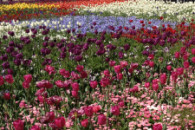
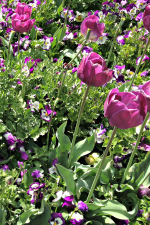
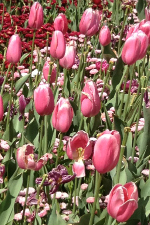
Bulbs are grouped into spring flowering bulbs (which are planted in autumn) and autumn flowering bulbs (which are planted in winter or early spring).  Spring is by far the most popular time to have bulbs in the garden and they produce an amazing display of colour in the garden.  Some great places to see stunning bulb displays in spring are at Araluen in WA, Floriade in Canberra and Tesselaar Tulip Festival in Victoria.

Bulbs are possibly the easiest of all plants to grow because they are a complete storage system.  Inside their white flesh are all the nutrients they need to grow beautiful leaves and flowers.  With bulbs, it is almost a case of ‘just add water’!

  1. Choose bulbs from the garden centre that will suit where you are going to plant them and make sure that you plant them at the right time of the year.
  2. Some bulbs grow much better if they are put in the fridge for a week or two before planting but make sure that they are labelled properly so that no one mistakes them for something that is edible.
  3. Prepare the garden bed by digging it over and removing any weeds and stones.  The soil needs to be nice and loose.
  4. A great way to ensure that the bulbs are planted in a random fashion is to gently toss them onto the garden bed in one big group and plant them where they land.
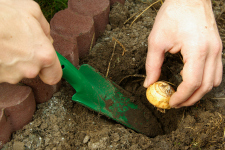
  5. To plant, just use a hand shovel to dig small holes that are twice the depth of the bulb.
  6. Pop the bulb in the hole, with the pointy part pointing up.
  7. Gently cover the bulb with soil.
  8. Water the garden bed lightly just once.  Bulbs won’t need any more water during autumn and winter because they have a great storage system.  Simply walk away and wait for the leaves to pop up through the ground.  Keep an eye out for snails!

SMARTY TIP:
As the flowers on the bulbs start to die, fertilise the garden with a bulb fertiliser from the garden centre.  This will fill the bulbs with more food which they will store until next year when they will once again grow new leaves and flowers.

Also, at the end of flowering, the leaves of the bulbs will die right down.  When this happens, use secateurs to cut the leaves off at the level of the soil.  Some bulbs, such as tulips, should be pulled out of the ground and stored in paper bags then replanted next autumn but other bulbs can simply stay in the garden.
 

Bulbs

Tulips


Bulbs_Planting 2_web


https://smartyplants.com.au/wp-content/uploads/2013/12/Shutterstock-V4643798-1.mp4

Planting bulbs is easy!  Just dig a hole, pop the bulb in with the point tip facing up and cover the soil back over.  Water lightly and that’s it!


Have a dig around!

Contact

  • info@smartyplants.com.au

The Blog!

  • Gardening’s not rocket science!

    Years ago, when our parents planted out their vegie patches, they turned over the soil, mixed some sheep manure through,...

    08 Dec,13
  • Have fun with your food!

    Just because I’m a grown up doesn’t mean that I can’t play with my food! The other day, I became...

    05 Dec,13
  • Little Halloween Pumpkin Heads

    Did you manage to grow some pumpkins for Halloween this year?  Don’t worry if you didn’t as they’re still available...

    28 Oct,13
  • Crazy Capsicums

    Capsicums are a confusing vegetable; not least because they are actually a fruit!  But also because they are related to...

    20 Oct,13
  • Take broccoli off the table!

    Since the beginning of time parents have been asking the age old question, ‘How do I get my kids to...

    06 Oct,13
  • Garden Gnomes are Back

    Yay! Garden Gnomes are back! Where have they been all these years?  I imagine that, having been discarded by gardeners...

    18 Sep,13
  • Planting a Bare-rooted Fruit Tree

    It’s winter! It’s time to plant an orchard!  You can do this at any time of the year but in...

    06 Jun,13
  • Warheads v. Radishes!

    Why will kids turn up their noses at radishes but they’ll eat Warhead candies?  Or they refuse to eat Brussels...

    03 May,13
  • Room to Move

    I get a bit peeved when I watch some gardening shows or read gardening books that tell people that they...

    26 Apr,13
  • Veg Out!

    Veg out!  Don’t you just love vegging out?  Sitting on the sofa doing absolutely nothing except watching a bit of...

    08 Feb,13
Find us on Google+ (c) 2012 Smarty Plants - Website by Loud Cow