
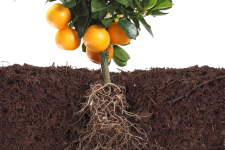
Smarty Plants - Plants for Kids
  • Facebook
  • Google+
  • RSS
  • Home
  • About
    • Hey Kids!
    • Hey Mums and Dads!
    • Hey Teachers!
    • The Legal Stuff
    • For the Media
  • Smarty Facts
  • The Garden
    • Garden Tools
    • Looking after the Garden
      • Waterwise Gardens
      • Fertilisers and Compost
      • Weed Control in the Garden
      • Looking after Potted Plants
    • Planting and Potting
    • Handy Garden Structures
    • Good Bugs
    • Bad Bugs
    • Plant Diseases
    • What is…?
  • The Kitchen
    • Breakfast
    • Lunch
    • Soups
    • Mains
    • Salads and Vegetables
    • Desserts
    • Cakes and Baking
    • Snacks
    • Cooking Skills
  • The Classroom
    • Teachers’ Q&A
    • Curriculum Plans
    • Lesson Plans
      • The Arts
      • English
      • Health and Physical Recreation
      • L.O.T.E.
      • Mathematics
      • Science
      • S.O.S.E.
      • Technology and Enterprise
    • School Gardens
      • Setting up the garden
      • Maintaining the Garden
      • Seasonal Information
  • Contact
  • BLOG
  • Home
  • The Garden Shed
  • Plant Diseases
  • Root Rot Disease

Root Rot Disease

Plants need their roots to be healthy so that they can take up water and nutrients from the soil to keep them fed.  But, sometimes the roots can become sick and they aren’t able to do the job that they are supposed to do.

Root rot is a disease that affects the roots of plants.  It is actually called phytophthora which is pronounced: fye-toff-thor-a. Sometimes it is also referred to as ‘dieback’.

WHAT DOES IT LOOK LIKE?
The roots of most plants are pale or cream with tiny little hairs on them but if they have root rot, these hairs become a dark brown colour and soggy and this then transfers to the larger roots.

The leaves on the plants start to yellow and even though they have been given enough water, it wilts as if it is drying out.

Wounds can sometimes appear on the base of the stem and gum or sap can weep from this spot.

Eventually the plant may die.

WHICH PLANTS GET ROOT ROT?
Almost any plant can get root rot from the smallest herbs and vegetables in pots to the largest trees.  Both indoor and outdoor plants can get root rot disease.  A lot of Australian native plants such as eucalypts, banksias, grevilleas and eucalypts get root rot really easily which is why areas of our native bush are often quarantined from people being able to visit.

HOW DO PLANTS GET ROOT ROT?
Overwatering is the most common cause of root rot diseases in indoor plants and potted plants.  Having their roots always in water makes it difficult for their roots to get the air that they need and this causes them to rot.

The spores of root rot diseases such as phytophthora are often spread by people walking from diseased soil to healthy soil or from soil being moved.  It can also spread in the air, on insects or even on crawling insects in the soil and some spores can even swim through very wet soil!

WHAT CAN YOU DO?
Prevention is definitely the best cure for root rot disease as it is very difficult to stop.  There are fungicides that can be applied but these are expensive and shouldn’t be used on vegetable or edible plants.

Use fresh, premium potting mix when planting into pots as this will drain really well and won’t carry any active spores.  Only water the plants when the soil doesn’t feel moist when you touch it with your finger.  And, don’t overwater the rest of the garden either as this can also cause outbreaks of root rot diseases.  Besides, it probably doesn’t need as much as you think.
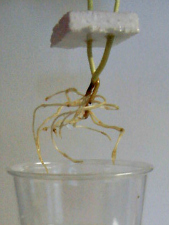
 

Healthy white roots
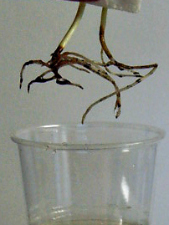
Healthy white roots

Roots with root rot
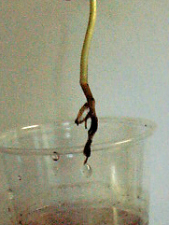
Roots with root rot

Very diseased roots

Very diseased roots


Comments are closed.

Have a dig around!

Contact

  • info@smartyplants.com.au

The Blog!

  • Gardening’s not rocket science!

    Years ago, when our parents planted out their vegie patches, they turned over the soil, mixed some sheep manure through,...

    08 Dec,13
  • Have fun with your food!

    Just because I’m a grown up doesn’t mean that I can’t play with my food! The other day, I became...

    05 Dec,13
  • Little Halloween Pumpkin Heads

    Did you manage to grow some pumpkins for Halloween this year?  Don’t worry if you didn’t as they’re still available...

    28 Oct,13
  • Crazy Capsicums

    Capsicums are a confusing vegetable; not least because they are actually a fruit!  But also because they are related to...

    20 Oct,13
  • Take broccoli off the table!

    Since the beginning of time parents have been asking the age old question, ‘How do I get my kids to...

    06 Oct,13
  • Garden Gnomes are Back

    Yay! Garden Gnomes are back! Where have they been all these years?  I imagine that, having been discarded by gardeners...

    18 Sep,13
  • Planting a Bare-rooted Fruit Tree

    It’s winter! It’s time to plant an orchard!  You can do this at any time of the year but in...

    06 Jun,13
  • Warheads v. Radishes!

    Why will kids turn up their noses at radishes but they’ll eat Warhead candies?  Or they refuse to eat Brussels...

    03 May,13
  • Room to Move

    I get a bit peeved when I watch some gardening shows or read gardening books that tell people that they...

    26 Apr,13
  • Veg Out!

    Veg out!  Don’t you just love vegging out?  Sitting on the sofa doing absolutely nothing except watching a bit of...

    08 Feb,13
Find us on Google+ (c) 2012 Smarty Plants - Website by Loud Cow