
How to Grow
Sweet Basil
Everyone who has ever eaten Italian food such as pizza would have seen sweet basil as it is used so much in Mediterranean cooking. It adds a sweet, aniseed type flavour that is unlike any other herb.
Basil plant doesn’t like cold weather so in Australia it is mostly grown from late spring through to the middle of autumn. The bush will produce lots of large, glossy green leaves which are packed with flavour and these can be picked to use in salads as well as cooked dishes.
Sweet basil is not only delicious, but it is also supposed to keep mosquitoes away so it is well worth planting around the barbecue area. It is also an excellent companion plant for tomatoes as gardeners believe that it improves the flavour of the fruit.
Botanical Name:
Ocimum basilicum
Life Cycle:
Annual.
They will only grow for one season then will produce flowers and die in winter.
When to Grow:
Late spring through to mid autumn.
Size:
Sweet basil can grow to about 60cm tall and the bush is about 40cm wide.
Requirements:
Plant in full sun and keep the soil moist. Remember that the more basil is harvested, the more it should be fed.
How to Plant
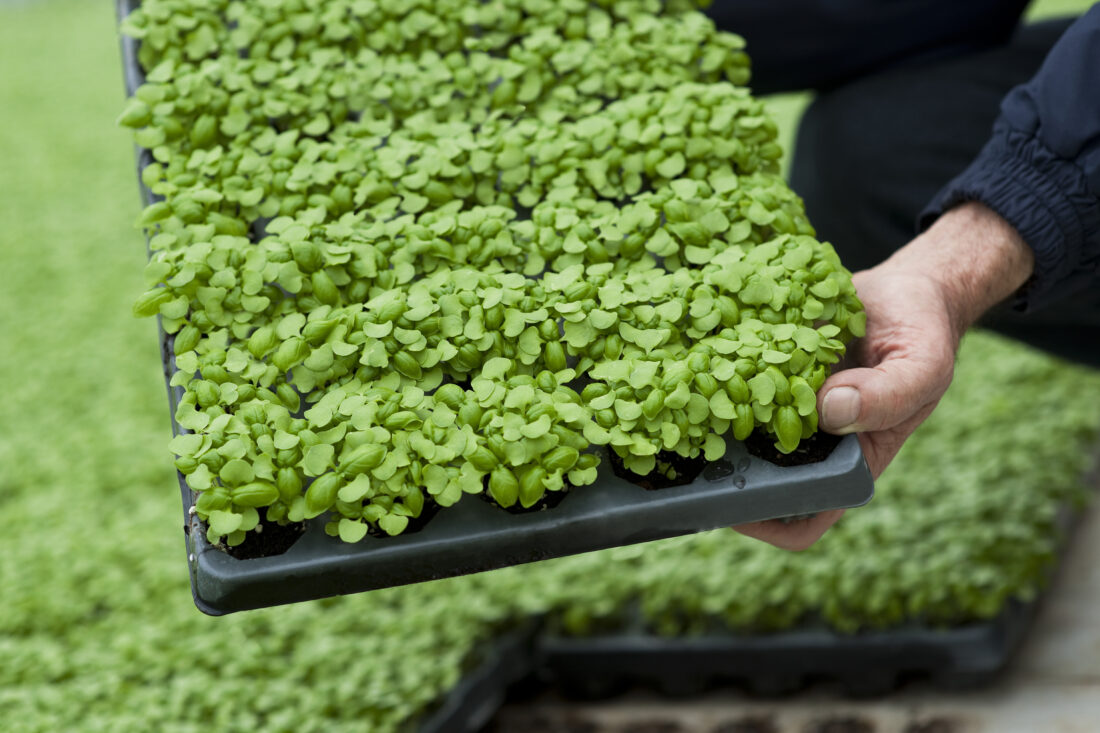
Choose a sunny position with at least six hours of sunlight and prepare the soil by digging through lots of compost or organic matter. Use a dibbler or large stick to make holes about 30cm apart. Carefully put a seedling in each hole and press the soil around the root ball. Water them and cover the soil with mulch.
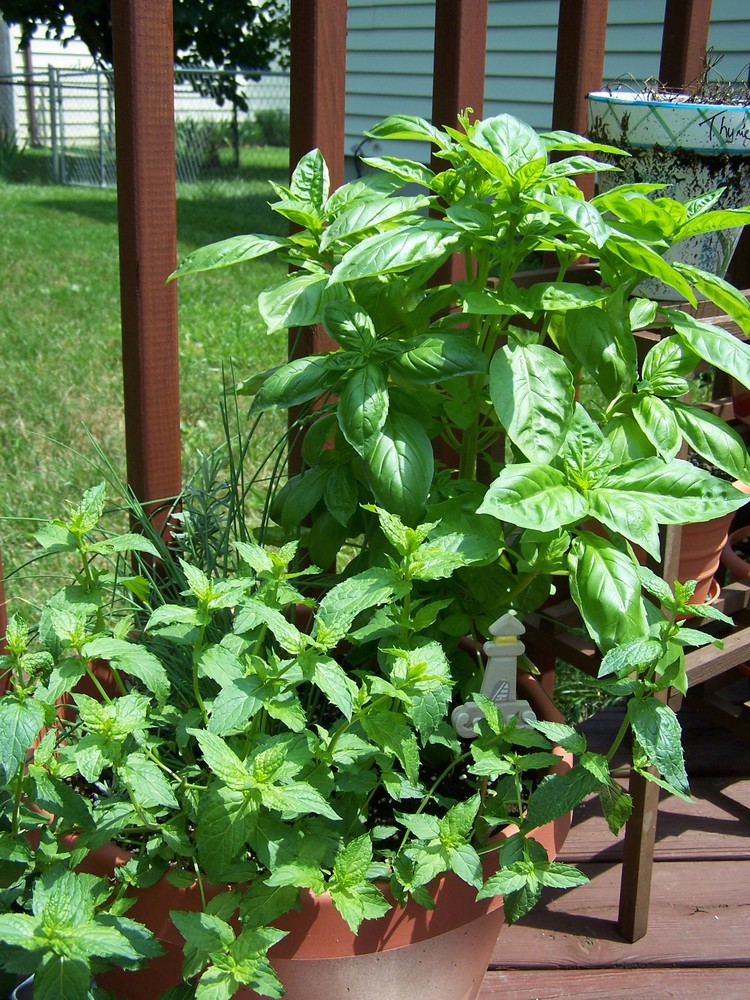
Sweet basil grows really well in containers but they need to be at least 30cm deep because they produce quite a strong rootball. Fill the pot with premium potting mix and water the seedlings after they have been planted. Make sure that the container gets plenty of sunlight.
Some people try to grow herbs such as sweet basil in small pots on the window sill but this is not often successful as there’s just not enough room for them to grow. If possible, grow them outside in the fresh air.
Care and Maintenance
Sweet basil loves to be harvested but the more it is harvested, the more it should be fed with liquid fertiliser as this will give it the energy it needs to grow more leaves. Water the plants well so that they don’t dry out.
Sweet basil bushes will last all the way through to the middle of autumn but as they get older they tend to harden up and not produce as many leaves. To stop this from happening, lightly trim some of the stems and this will encourage new ones to grow.
The flower heads of sweet basil should be removed because the plant will put more effort into growing them than it will leaves. Once they are removed, more leaves will grow.
Harvesting
Sweet basil loves to be harvested so start using it as soon as it is large enough. Harvest the leaves by picking off the larger ones first with your fingers. The softer green stems can also be cut as these can be chopped up for stews and casseroles.
Bunches of sweet basil can also be cut and kept in a vase of water on the kitchen bench or in the fridge so that the leaves can be used as they are needed.
How they Grow
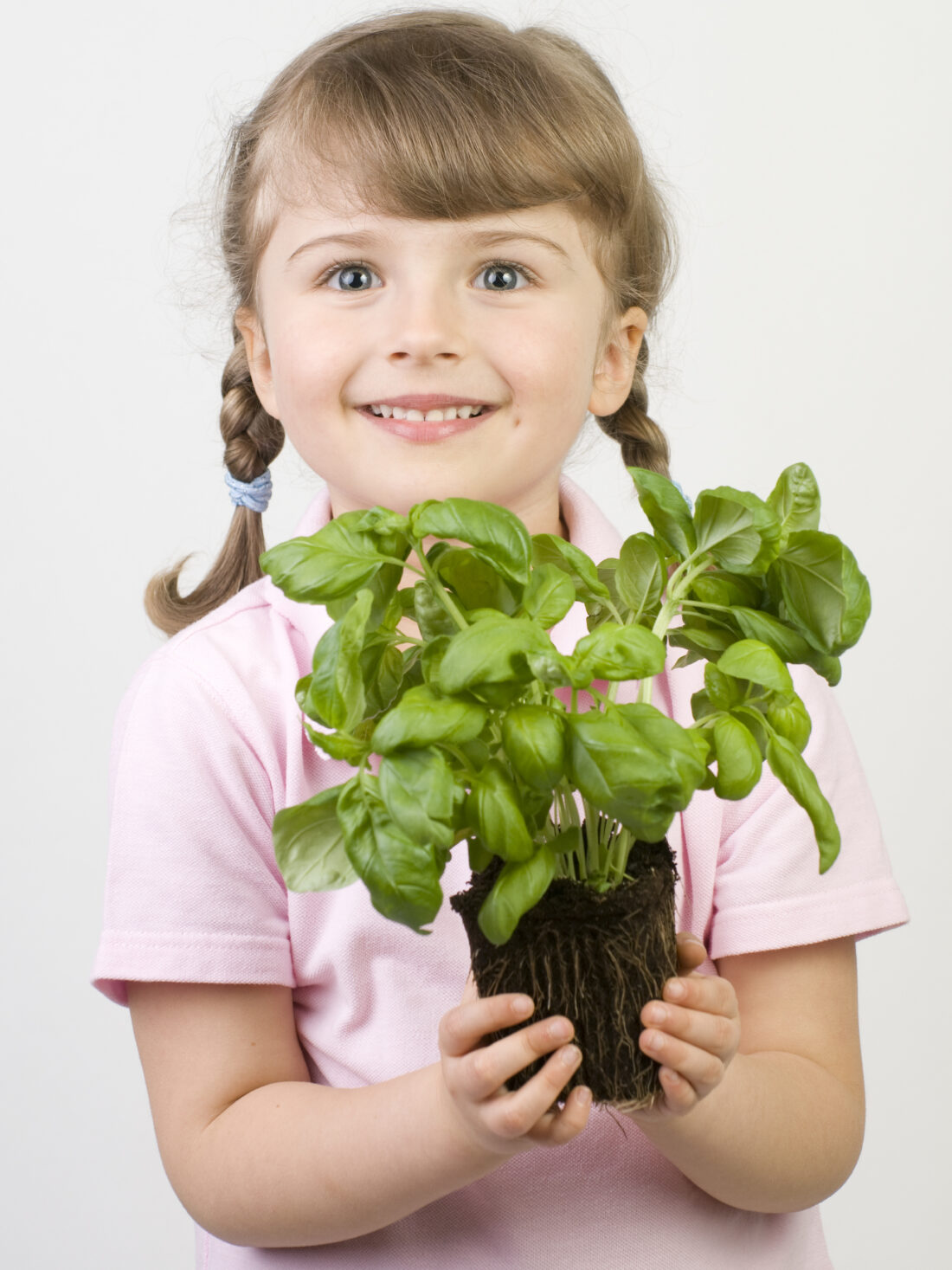
Basil seedlings grow into a bush covered in oval shaped green leaves. The stems are hard and light brown at the base and become soft and green towards the top. After several months, the bush will produce pale mauve flower heads which are actually made up of lots of tiny flowers. These occasionally drop seeds which might produce more basil seedlings.
How to Eat
Sweet basil is a must in all types of Italian food as well as in many other cuisines. The real trick is to try to put the leaves into the cooking towards the end of the process as, if they are cooked for too long they will lose their flavour.
It is better to tear the leaves of sweet basil instead of cutting it though the leaves can be used whole or in small pieces. Try including sweet basil in salads or putting it on a piece of toast with sliced tomato. Find more great recipes in the Smarty Plants Kitchen.